Seeing 10 million years

You may have noticed a new watermark on my images. My son Dan and his fiancee Melina gifted me with this graphic designed by a friend of theirs, Hannah Bess Ross. Many Native American cultures have totems or tonalii which are spiritual links to an animal. My link is to this tall, ancient bird.

Sandhill Crane, Virgil Grissom Wetlands, Florida

Sandhill Crane, Virgil Grissom Wetlands, Florida

This fellow, nearly five feet tall, let me sit in the grass and watch him dig for insects while getting his portrait with a wide angle lens. Sandhills in Florida become accustom to humans and have even eaten out of my hand. While some Sandhills live year round in Florida, most migrate to the northern U.S. and Canada. An eastern migration route spends several weeks south of Lake Michigan in Jasper Pulsaki Wildlife Refuge in northern Indiana feeding on leftovers in the surrounding farm fields.

Corny landing

Corny landing

Fossils of birds nearly identical to the Sandhill are over 10 million years old. The Sandhills’ call is loud, ancient, and unforgettable. Click here for their flight call Our home is on the migration path, and I’ve heard their call in my house and gone outside to see hundreds of cranes far up in the sky on the move.

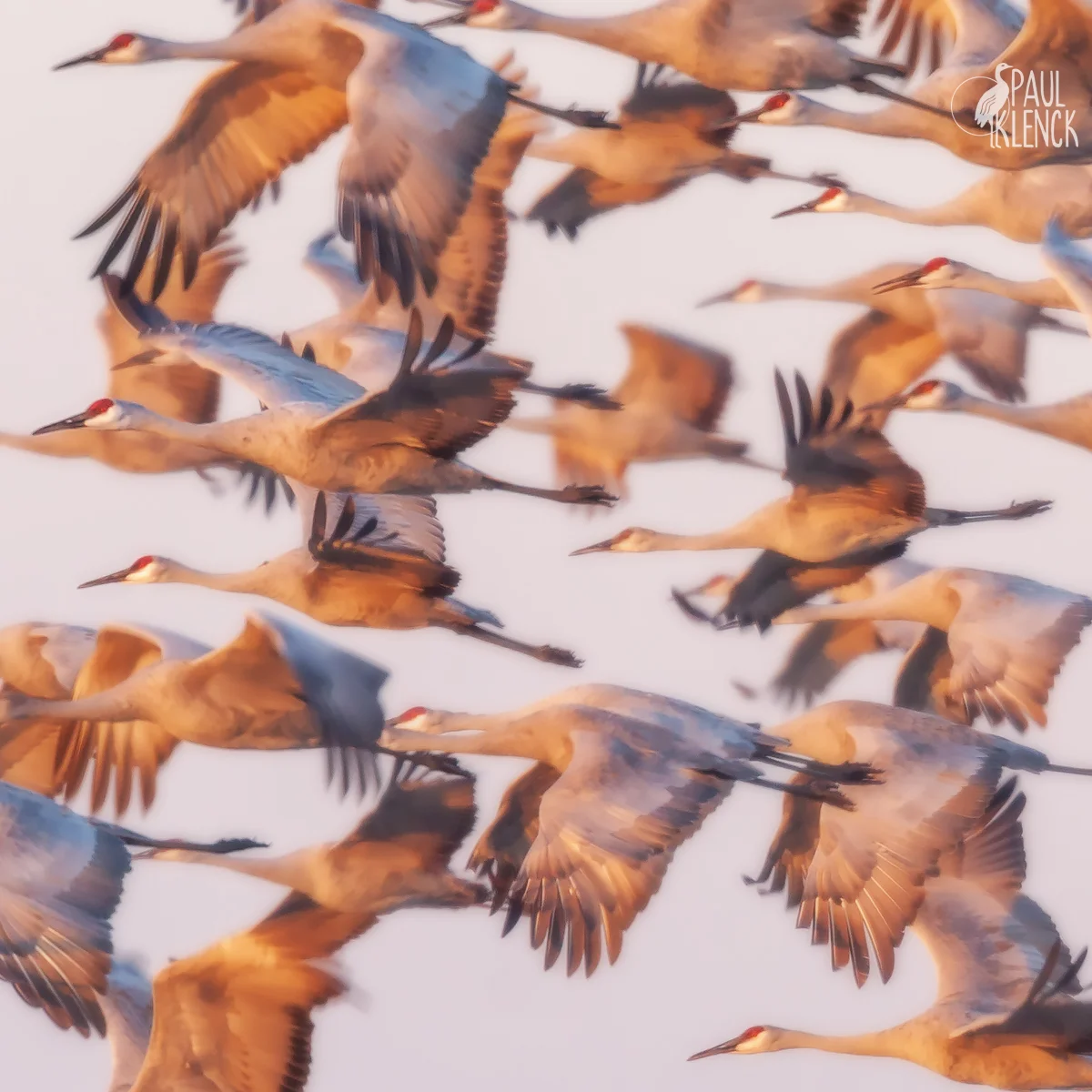
The birds mate for life, and you can find pairs doing elaborate dances jumping in the air, spreading their wings, and calling to their mate.

Moondance
Moondance

Jasper Pulaski sunset flight

Jasper Pulaski sunset flight

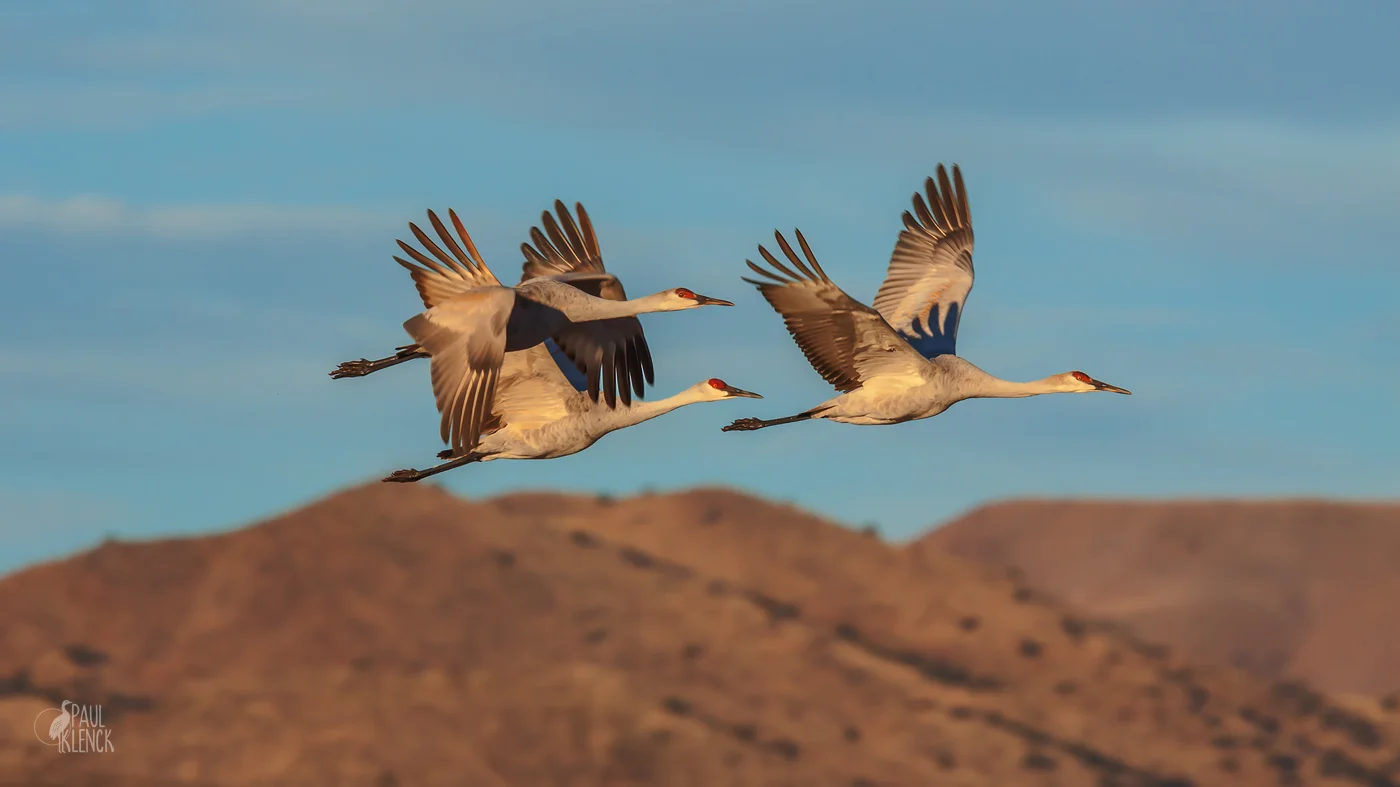
The western migration route funnels the cranes along the Platte River in Nebraska, and many winter along the Rio Grande in New Mexico or head further south into Mexico. The cranes usually spend the night in water to keep away from predators. At Bosque, near dawn, thousands of cranes and geese explode in flight from the pools and fly to nearby fields. Last week’s post had an image of snow geese on a dawn take off.

Cranepool, Bosque del Apache National Wildlife Refuge, New Mexico
Cranepool, Bosque del Apache National Wildlife Refuge, New Mexico

Sandhill Trio

Sandhill Trio

Sandhill reflection 2-26 web.jpg

The fellow in the first image let me collect some close up shots along with the wide angle.

Close up time

Close up time

Silent Night

All is calm, all is bright

Salmon River, Idaho

Salmon River, Idaho

Glories stream from heaven afar

Dawn, Wyoming

Dawn, Wyoming

Love'‘s pure light

White Sands, New Mexico

White Sands, New Mexico

With the dawn of redeeming grace.

Bosque del Apache, New Mexico

Bosque del Apache, New Mexico

Kodachrome

Utah is filled with spectacular national parks and monuments, and it has some state park gems. With appropriate marketing, one is named Kodachrome Basin State Park.

Sunset, Kodachrome Basin State Park, Utah

Sunset, Kodachrome Basin State Park, Utah

How about a quiz? What does this image have to do with the next one?

Morning Glory Spring, Yellowstone National Park, Wyoming

Morning Glory Spring, Yellowstone National Park, Wyoming

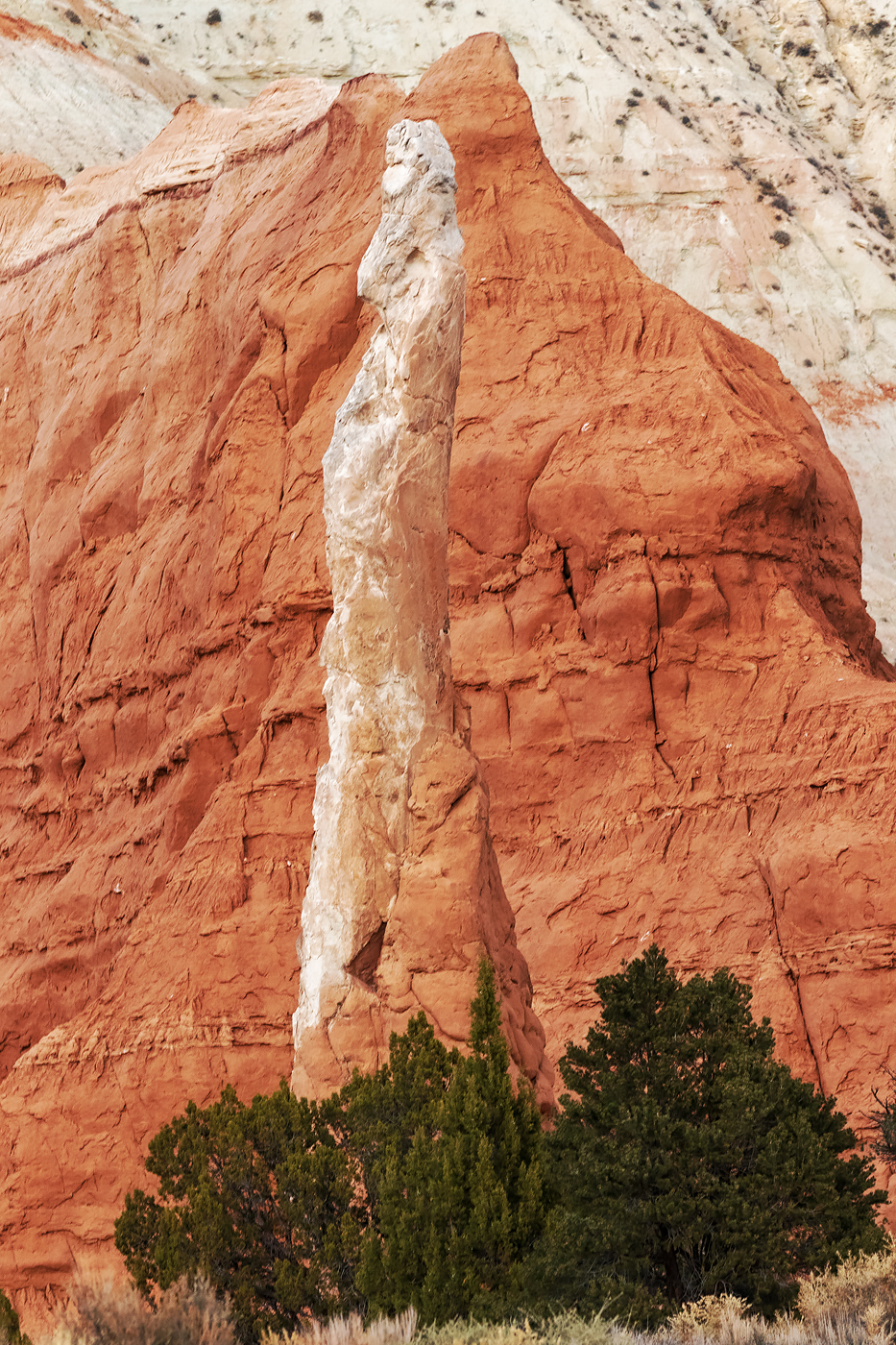
Sedimentary pipe

Sedimentary pipe

While geologists aren’t sure how the 67 sedimentary pipes in the park were formed, the primary theory is that they are remnants of ancient springs, like Morning Glory above, that were then filled with sediment and the softer sandstone eroded away. The monoliths are intriguing features throughout the park.

Fins and spires, Kodachrome Basin

Fins and spires, Kodachrome Basin

Moon and Venus, Kodachrome Basin State Park

Moon and Venus, Kodachrome Basin State Park

Grand Sunset

As I was photographing in southern Utah, I had worked my way east and crossed into northern Arizona. I was getting ready to retrace my path back to the hotel, when I noticed clouds gathering in the south. I took a chance that a return route via the north rim of the Grand Canyon might yield a nice sunset. I checked to make sure the road was open and headed out. As I drove, smoke gathered, and I was soon driving through the darkness of a prescribed forest burn. Photography wasn’t looking too good. I got through the burn and the clouds were still up, but a mist was gathering. I took a chance there would still be a colorful sunset and drove to the canyon.

There are fewer visitors to the north rim, and I discovered very few on the cold, mid-November evening. I was joined by a few photographers and viewers, but a mist was obscuring the view, and the sky was slate gray.

Bright Angel Point, Grand Canyon National Park

Bright Angel Point, Grand Canyon National Park

Two guys were scouting the run they would make the next day. To the South Rim and back!! Fourteen miles and nearly 6,000 feet down, then over twelve miles and 5,000 feet up, and then come back. Unbelievable.

I was content to stay on the rim and take some images. The conditions were improving.

View from the North Rim of the Grand Canyon

View from the North Rim of the Grand Canyon

The winter sun hit the southwest rim. Most everyone had left the cold night except for one other photographer and his French Bulldog who had a great deal of interest in my shoes—and likely my friend’s bulldog I had visited a few days before!

Sunset, Grand Canyon

Sunset, Grand Canyon

Then, a sight I’d never seen before. The sun seemed to melt, dissolve and whirl away.

Whirling Sun

Whirling Sun

By now, I was alone on the rim. But the light show often doesn’t end after the sun sets. After the drama, a simple coda. And then perhaps, some stars.

Grand Canyon dusk

Grand Canyon dusk

Southwest Night Sky

One of the great attributes of the Southwest U.S. away from the cities is the dark skies. A benefit of traveling at the end of the year is that it is darker longer. Our first night in Death Valley National Park had clear, desert sky, an early setting moon, and a Night Sky ranger talk. After the talk, another couple sat outside their car enjoying the Milky Way.

Milky Way, Death Valley National Park, California

Milky Way, Death Valley National Park, California

As the week went on, the moon got fuller and stayed up later making it more difficult to get the darkest sky images. However, the moonlight helped light up the red rocks of Zion National Park. The first image below is looking west with the Milky Way starting to appear. The next image is turned east with the moon and Venus showing through the remaining light from the setting sun.

Mt. Carmel Highway, Zion National Park, Utah

Mt. Carmel Highway, Zion National Park, Utah

Southeast view, Zion National Park

Southeast view, Zion National Park

A future blog post will have some images from one of the most amazing sunsets I’ve ever seen. Afterward, some stars started coming out. You can see the constellation Cassiopeia over the tree on the left. You want clouds for a fiery sunset, but not for star images.

North Rim night, Grand Canyon National Park, Arizona

North Rim night, Grand Canyon National Park, Arizona

The moonlight helps light the hoodoos of Bryce Canyon.

Bryce Canyon National Park, Utah

Bryce Canyon National Park, Utah

Just outside Bryce National Park is Red Canyon in Dixie National Forest. Your eyes’ night vision don’t pick up color very well, but the camera sensor captures the red rock in the moonlight.

Red Canyon, Dixie National Forest, Utah

Red Canyon, Dixie National Forest, Utah

Into the valley of death

Badwater Basin, the lowest point in North America, lies 282 feet below sea level. A spring-fed pool sits in the salt of the basin, reflecting the Black Mountain range to the east.

Badwater Basin spring, Death Valley National Park

Badwater Basin spring, Death Valley National Park

A walk from the spring into the salt flats challenges perspective. A small landmark looks not far away, until you’ve walked a half mile to get there.

Salt flats and Panamint Range, Death Valley, California

Salt flats and Panamint Range, Death Valley, California

Death Valley is also the driest location in the U.S. Less than 2 inches of rain fall in an average year, though the evaporation is so great, a 12 foot deep lake would evaporate in that year. The evaporation over eons has left a great salt pan across the valley. The salt forms great fractal patterns across the Basin.

Badwater Basin salt fractals and Black Mountains

Badwater Basin salt fractals and Black Mountains

At Dante’s View in the Black Mountains, you can look nearly a mile down into the Basin and across the Valley. On a very clear day Mt. Whitney, the tallest peak in the contiguous States at over 14,000 feet, is visible.

In the picture below, you can see Badwater Basin road. The spring in the first image, is blocked from view by the ridge. The second image was shot on the portion of the trail showing just above the ridge that is darkened by footsteps and was in the shadow of the Black Mountains when taken. The third image was taken in the bright salt flats where the trail ends. If you look very carefully, you might be able to see a few hikers there, a mile out from the spring.

Badwater Basin from Dante’s View

Badwater Basin from Dante’s View

Toadstools on the Staircase

Established in 1996, Grand Staircase-Escalante National Monument spreads across southern Utah. President Trump has attempted to reduce protected land by nearly half, and open 700,00 acres to mineral extraction. Neighboring Bears Ears National Monument, established primarily to protect Native American antiquities, was reduced even more. The executive actions are still pending court review.

A short hike leads to a collection of “toadstools,” pillars supporting a harder boulder. The column is sheltered by the boulder and erodes more slowly than the surrounding rock.

Toadstool Formation, Grand Staircase-Escalante National Monument, Utah

Toadstool Formation, Grand Staircase-Escalante National Monument, Utah

In the upper center of this image you can see the younger, harder Dakota Formation boulders above the softer, older Entrada Sandstone. One Dakota boulder rests on a forming toadstool in the center.

Kane County, Utah

Kane County, Utah

Sometimes it’s helpful to have some human scale to better appreciate the formations.

Paul Klenck and Toadstools-8748a web.jpg

Jets and contrails criss-cross the sky. Hopefully, these toadstools will withstand encroachment from the ground.

Toadstools-silhoute web 0312.jpg

Pink Sands

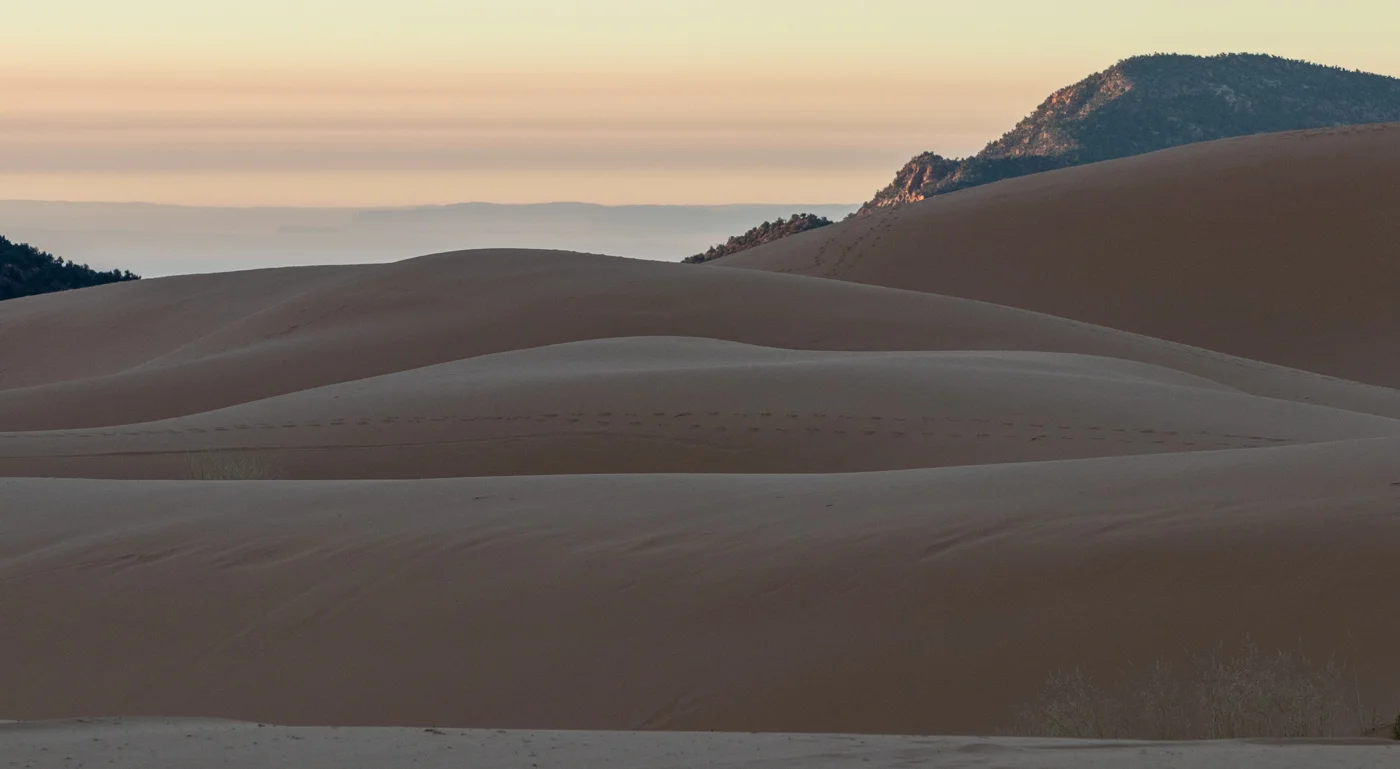
I’m out collecting some images in southern Utah. Yesterday morning I couldn’t resist the name of Coral Pink Sand Dunes State Park right on the Arizona border.

Coral Pink Sand Dunes State Park, Utah

Coral Pink Sand Dunes State Park, Utah

The park is used extensively by ATVs and other vehicles in the dunes, so finding areas without tracks can be a challenge.

Coral Pink Sand Dunes (1 of 1)-7.jpg

Below your feet are lots of little animal tracks among the vehicle track and footprints, and many unusual plants grow. I think I brought a good portion of the sand back in my shoes.

Coral Pink Sand Dunes (1 of 1)-2.jpg

Autumn entered

Fall colors came running in and quickly out of northern Illinois. Nice colors this year. Here are some yellows.

Morton Arboretum, Lisle, Illinois

Morton Arboretum, Lisle, Illinois

Under the Maple tree

Under the Maple tree

Yellow explosion I

Yellow explosion I

Just be careful where you park.

Yellow explosion II

Yellow explosion II

What's flowing in Transylvania?

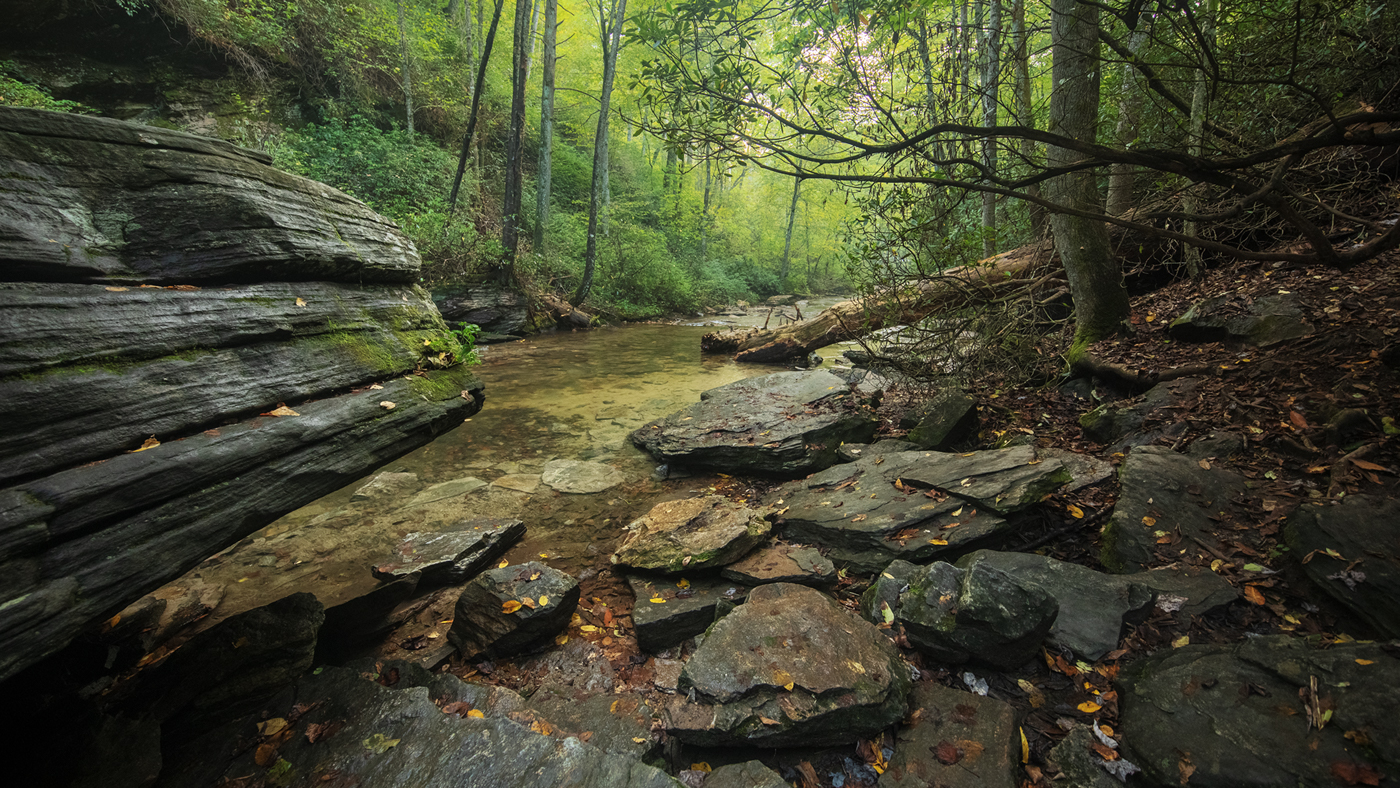
Transylvania County is the wettest in North Carolina and has over 250 waterfalls. Here’s what’s likely the best known. Looking Glass Falls is next to the main road running through Pisgah National Forest heading to the Blue Ridge Parkway and is a popular stopping point.

Looking Glass Falls, Pisgah National Forest, North Carolina

Looking Glass Falls, Pisgah National Forest, North Carolina

Looking downstream from the falls.

Looking Glass Creek, Pisgah National Forest

Looking Glass Creek, Pisgah National Forest

I went looking for another tall falls that 40 years ago I hiked to with my buddies and jumped off the top to swim in the pool below. I couldn’t find it, but I heard some falls along the trail and found this delight.

Chestnut Falls, Pisgah National Forest

Chestnut Falls, Pisgah National Forest

The Eastern Band of the Cherokees Reservation sits between Transylvania County and Great Smoky Mountains National Park, and is also filled with waterfalls. Here are two—or three, if you count the first as a double falls.

Soco Falls, Cherokee Reservation, NC

Soco Falls, Cherokee Reservation, NC

Mingo Falls, Qualla Boundary, North Carolina

Mingo Falls, Qualla Boundary, North Carolina

Weathered feathers

Birds need to eat, raise young, survive regardless of the weather. Fortunately, for a photographer, challenging weather can make engaging images. I love the challenge of wide angle environmental images, but to get an animal portrait, you need a tolerant creature. This Great Blue Heron, who hangs around people fishing on the beach, was cooperative.

Melbourne Beach storm clouds

Melbourne Beach storm clouds

Great Blue Heron dawn

Great Blue Heron dawn

Turkey Vultures have an image problem. Their life cleaning up dead animals adds to the creepy view. Featherless heads and legs to get into the carrion enhance the feel. A telephoto lens helps get a closer view.

Turkey Vulture, Canaveral National Seashore

Turkey Vulture, Canaveral National Seashore

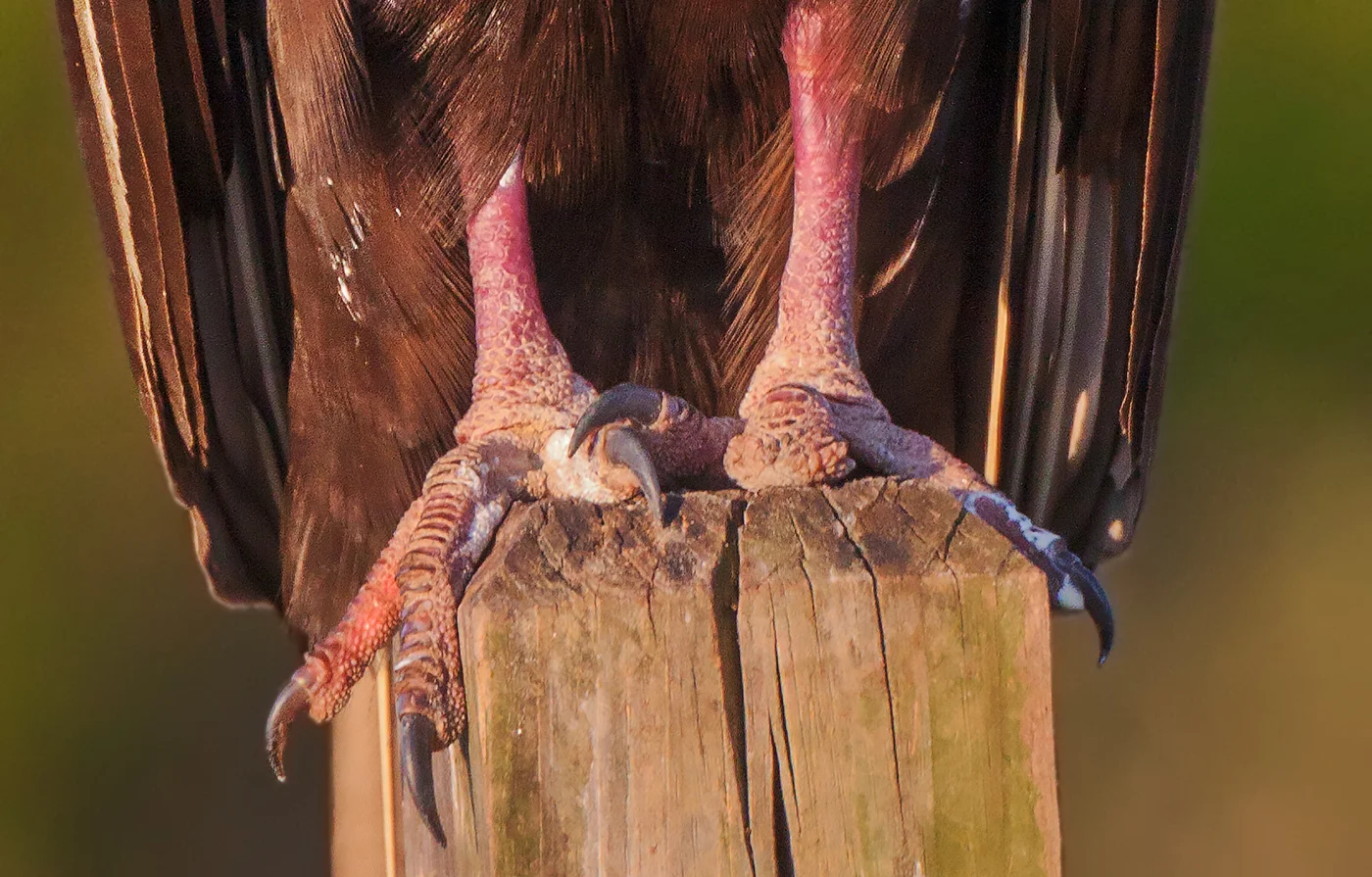
Crossing the talons is a cute gesture, but note the missing middle toe and wonder what happened to this survivor.

20150131_Canaveral 118 vulture toes web.jpg

But vultures should have their day in the sun, or in this case, in a rainbow.

Somewhere under the rainbow

Somewhere under the rainbow

As sweet as Tupelo Honey

Congaree National Park in central South Carolina is the largest remnant of old growth floodplain forest in the U.S.. Less than one-half of one percent of what once was 35 million acres in the Southeast U.S. remains.

You can take all the tea in China
Put it in a big brown bag for me

Tupelo trees, Cedar Creek, Congaree National Park

Tupelo trees, Cedar Creek, Congaree National Park

Along with Tupelo, Bald Cypress grows throughout the floodplain. The knees are still a mystery. Perhaps support in flood conditions, perhaps an air exchange.

She's as sweet as Tupelo honey
She's an angel of the first degree

Bald Cypress knees

Bald Cypress knees

The Congaree was a shelter for freedom seeking slaves during the Civil War. After the war, many former slaved people farmed the floodplains and established towns in the uplands.

You can't stop us on the road to freedom
You can't keep us 'cause our eyes can see

Tupelo and Cypress

Tupelo and Cypress

I’ve never gotten more aerobic exercise on a flat trail. Despite covering myself in insect repellent, whenever I’d stop walking, a cloud of mosquitoes would surround me, so moving fast was the best repellent. However, the fast pace had me miss seeing the 5 foot coachwhip snake, and we gave each other a good fright. My heart rate got another boost startling two feral hogs in underbrush. It was a memorable hike.

Boardwalk trail among the Tupelo

Boardwalk trail among the Tupelo

She's as sweet as Tupelo honey
Just like honey, baby, from the bee

Van Morrison

Bald Cypress, Congaree National Park, South Carolina

Bald Cypress, Congaree National Park, South Carolina

Graveyard Fields

Until I returned, I’d forgotten I’d left a piece of my soul here.

A stop on the Blue Ridge Parkway looks down into an area called Graveyard Fields. A geologic event killed the trees leaving stumps and mounds and looking like a graveyard. Later, a devastating fire in the 1920s reinforced the look. While working at a nearby summer camp, I’d lead hikes into this area. We’d sometimes camp in the fields, watching shooting stars while sleeping under the open sky. Camping is now prohibited here, and trees and larger growth have replaced the open field. Time changes things.

Graveyard Fields trail, Pisgah National Forest, North Carolina

Graveyard Fields trail, Pisgah National Forest, North Carolina

Part of the trail runs along the Yellowstone Prong of the Pigeon River. A college roommate lived nearby in North Carolina. He returned home for a long weekend while I was in law school, and I went along so I could hike again along the Pigeon River. Rain started just as I got the tent up. It rained all night. Before light, I heard strange sounds and looked out. The river was flooding and surrounding my tent! I hurriedly broke camp. Since most of the trail was flooded, I bushwhacked my way to the road where John would pick me up.

This was my first time back to the trail after that adventure.

Yellowstone Prong, Pigeon River

Yellowstone Prong, Pigeon River

Water falls nearly everywhere you look, including these lower falls of the Yellowstone Prong in Graveyard Fields.

Second Falls, Graveyard Fields, North Carolina

Second Falls, Graveyard Fields, North Carolina

An overlook on the Parkway provides a distant view of the falls.

Yellowstone Prong falls

Yellowstone Prong falls

Near where we camped in 1978, were several branches of the trail. I wasn’t sure which was the main trail. Following one led to these rocks on a bend in the river. I was suddenly taken back 40 years. I’d bring the young campers to this very spot to swim and play. I hadn’t thought of it in all that time, and the memory opened as I placed my feet on the spot.

Swimming hole, Yellowstone Prong, Pisgah National Forest

Swimming hole, Yellowstone Prong, Pisgah National Forest

Memory catcher

Memory catcher

Small worlds

A year ago today, I was wandering through Saguaro National Park in Arizona. The big vistas of huge cactus and desert hills is eye-catching, but looking at the tiny environments within the scene is just as fascinating.

Thorny pattern, Saguaro cactus

Thorny pattern, Saguaro cactus

Saguaro NP E 285 flower web.jpg

Plenty of insects survive among desert plants. I’ve no idea what this creature is.

Saguaro NP E 125 bug web.jpg

I imagine it is a challenge for predators to get among the thorns to try to feed on this grasshopper, who seemed quite happy climbing around the cactus.

Among the thorns

Among the thorns

Twilight Zone

I loved Rod Serling’s Twilight Zone. The Dali-inspired intro got you ready for travel to another time and dimension. So let’s journey to another time, though recent events show we haven’t entered a new dimension.

Root cellar, Minidoka National Historic Site

Root cellar, Minidoka National Historic Site

The root cellar is one of the few structures still located in its original site. Minidoka, Idaho was one of many “relocation centers” for people of Japanese ancestry (Nikkei) on the West Coast of the United States. Nearly 10,000 Americans were interred at Minidoka during the War. Afterwards, most buildings, fences, towers were moved or destroyed to try to erase the memory.

Mess hall and barracks, Minidoka

Mess hall and barracks, Minidoka

Some buildings such as the brown mess hall and gray barracks were moved and used elsewhere. Some have been found, and “relocated.” Where I grew up in Florida, barracks like these remained near the airport, a WWII Naval Air Station, which housed German POWs.

Minidoka barracks detail

Minidoka barracks detail

Just a bit north is the tiny town of Arco. It lights up its fame as the first community ever lit by electricity solely derived from the nearby nuclear power plant.

Arco, Idaho

Arco, Idaho

It doesn’t advertise that the 1961 reactor accident was the world’s first, and only U.S., fatal reactor failure killing three people.

Often we just let history fade away.

Arco homestead along the Lost River

Arco homestead along the Lost River

The Lost River Range

The Lost River Range

Morning wood

An uprooted tree at dawn provides some weathered texture.

Taken on top of an old volcano cone at Craters of the Moon National Monument, Idaho.

Dawn at Inferno Cone, Craters of the Moon National Monument, Idaho

Dawn at Inferno Cone, Craters of the Moon National Monument, Idaho

cmnm 3914 wood swirl web.jpg
cmnm 3910 wood swirl web.jpg

A decade

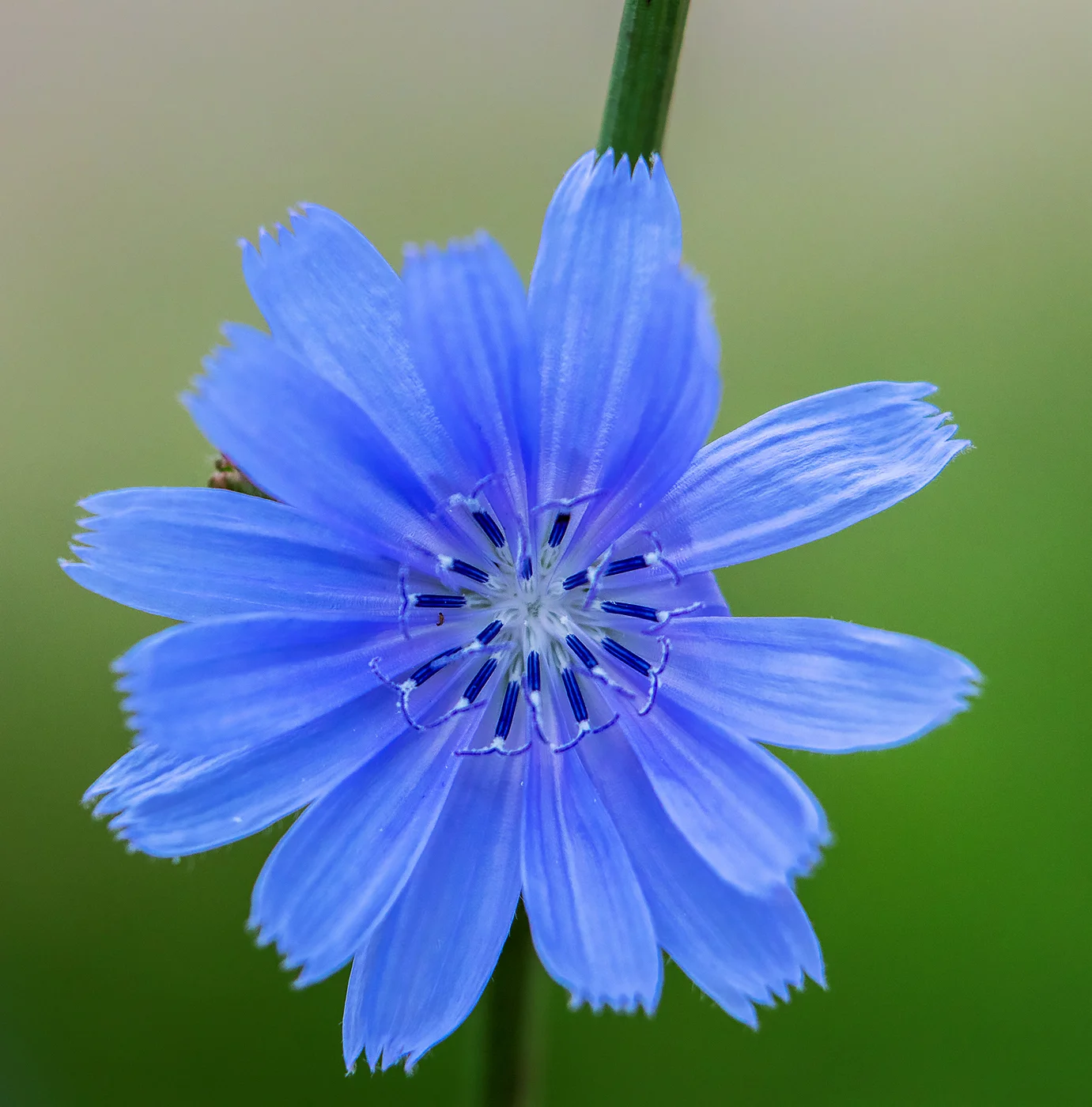
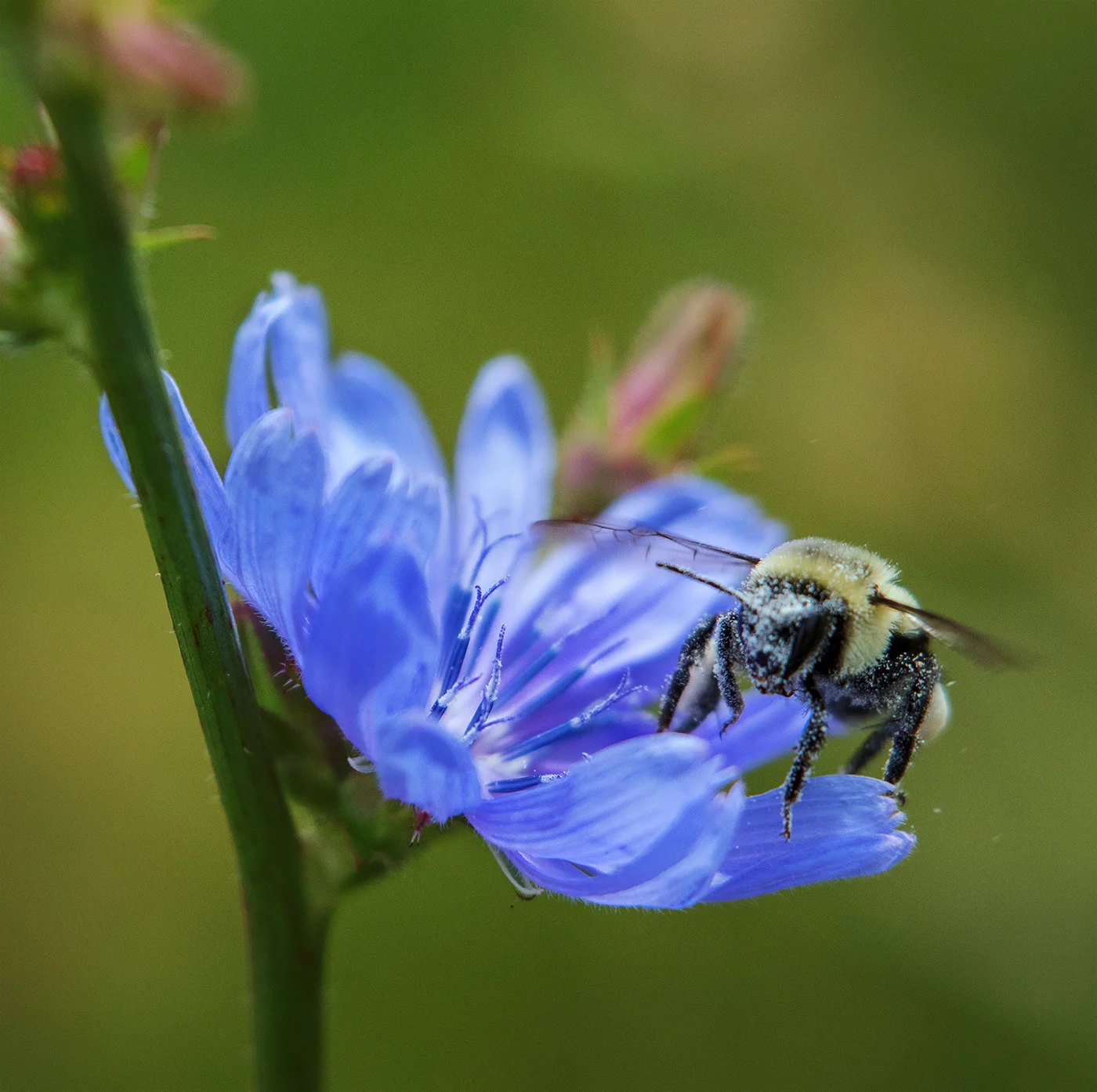
Ten years ago, driving home from Springfield, I stopped for a walk at a park near I-55. One picture I took was of a chicory flower--a "weed" you'll see along roadsides this time of year in Illinois. I sent the image to some friends on Friday, calling it Friday Foto and sharing some of the beauty near our feet. Over the last decade, the images have gone beyond some common roadside sites, but the intent has remained the same: to share the beauty around us.
Chicory flower

Chicory flower

Returning to the roots--or just above the roots--I stopped by a vacant lot in downtown Milwaukee that was filled with Chicory, Queen Anne's Lace and other common wildflowers. Here is a bit of the world along the sidewalk. And, yep, the same chicory whose roots are dried and ground as a coffee substitute or flavoring.

Chicory and hungry bee

Chicory and hungry bee

Getting dusted up

Getting dusted up

Loading up pollen on the leg, and sharing some

Loading up pollen on the leg, and sharing some

The world at our feet

The world at our feet

Up to go down

Timpanogos Cave National Monument is in the Watsatch Mountains in Utah.

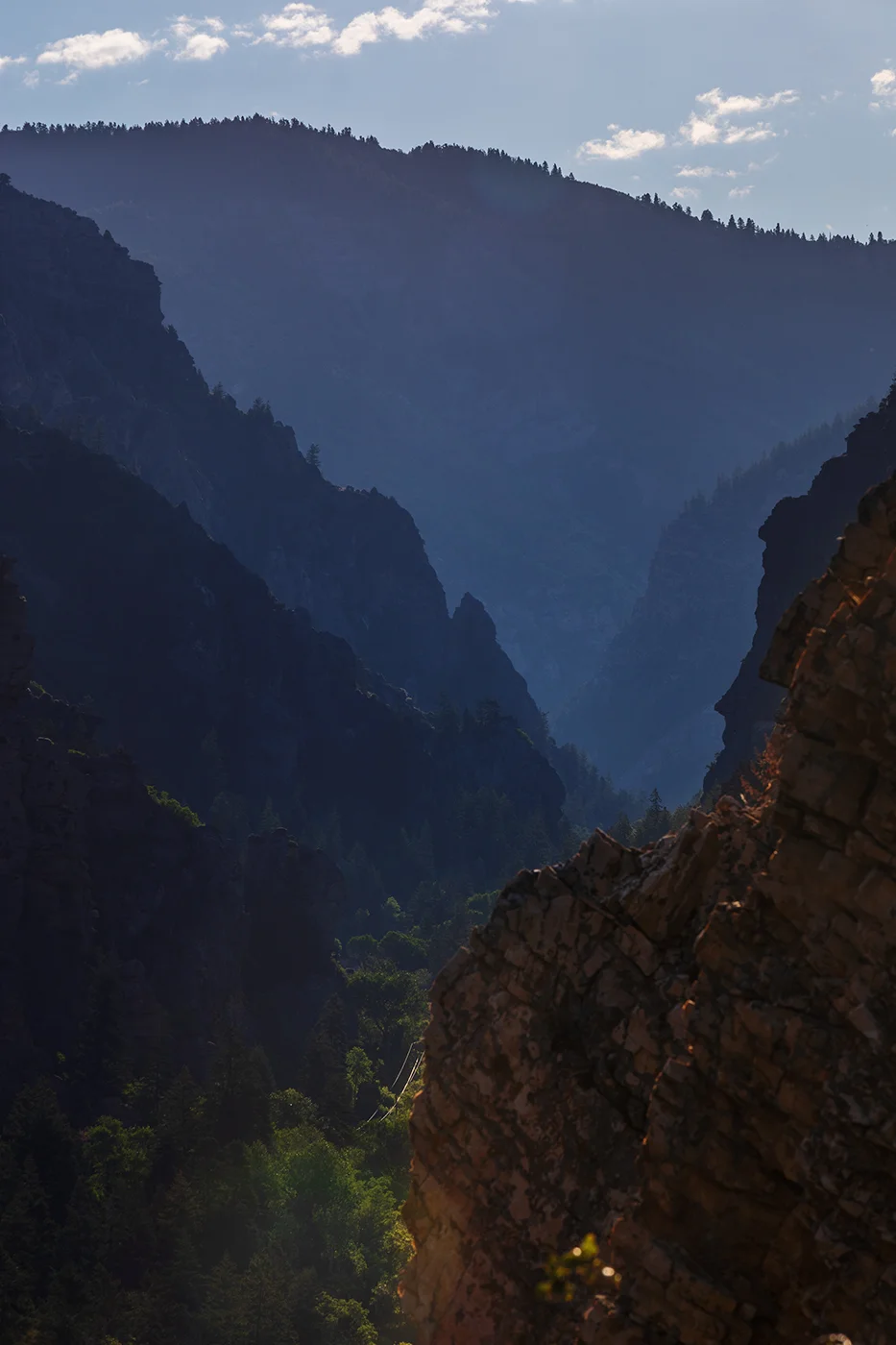
Up in the mountains. You need to hike up over a thousand feet from the valley floor to enter the cave. In this image, you can see the road where you start the hike. 

American Fork Canyon, Utah

American Fork Canyon, Utah

Look up to see other hikers and the cave entrance.

Timpanagos Cave hike and entrance

Timpanagos Cave hike and entrance

Once in the cave, you follow old fault lines which have been carved into caverns and are being filled with formations.

Timpanogos Cave National Monument

Timpanogos Cave National Monument

On tour, the ranger explains the formations, such as bacon stalactites he lights with his flashlight and the cave's big feature: greenish helictites.

Ranger tour

Ranger tour

The helictites are tiny tubes where water and minerals flow through capillarity attraction through the small capillaries and result in curled, twisting features.

Helictites

Helictites

Outside the cave, there was one outstanding, helictite-like beard.

Timp 3621 beard web.jpg

Ponderosa

The Salmon River runs through a high desert valley that it has carved. One plant that thrives in the environment is the Ponderosa Pine. Its thick, orange bark (that smells like vanilla) survives most fires.

Salmon River, Idaho

Salmon River, Idaho

However, some intense fires will destroy all, or nearly all, trees in its path.

Lone pine

Lone pine

The tree can serve as a perch to host raptors looking for a fish dinner in the river.

American Bald Eagle

American Bald Eagle