I remember the first time I saw a Pronghorn. I was 14 and with my parents visiting the National Bison Range on the Flathead Indian Reservation in southwest Montana. One of President Biden’s last acts was to sign a bill transferring care and ownership of the Bison Range from the National Wildlife Service to the Confederated Salish and Kootenai Tribes of the Flathead Reservation. Somewhere I have a snapshot of Pronghorn from my Kodak Instamatic.
I’m reading The Animal Dialogues, a terrific book by Craig Childs in which he beautifully writes of amazing encounters with animals throughout his life. I’ve read several of Childs’ books and quoted them in this blog, but those were mainly about his extensive work with Ancestral Puebloans sites. This morning I read his chapter on Pronghorns.
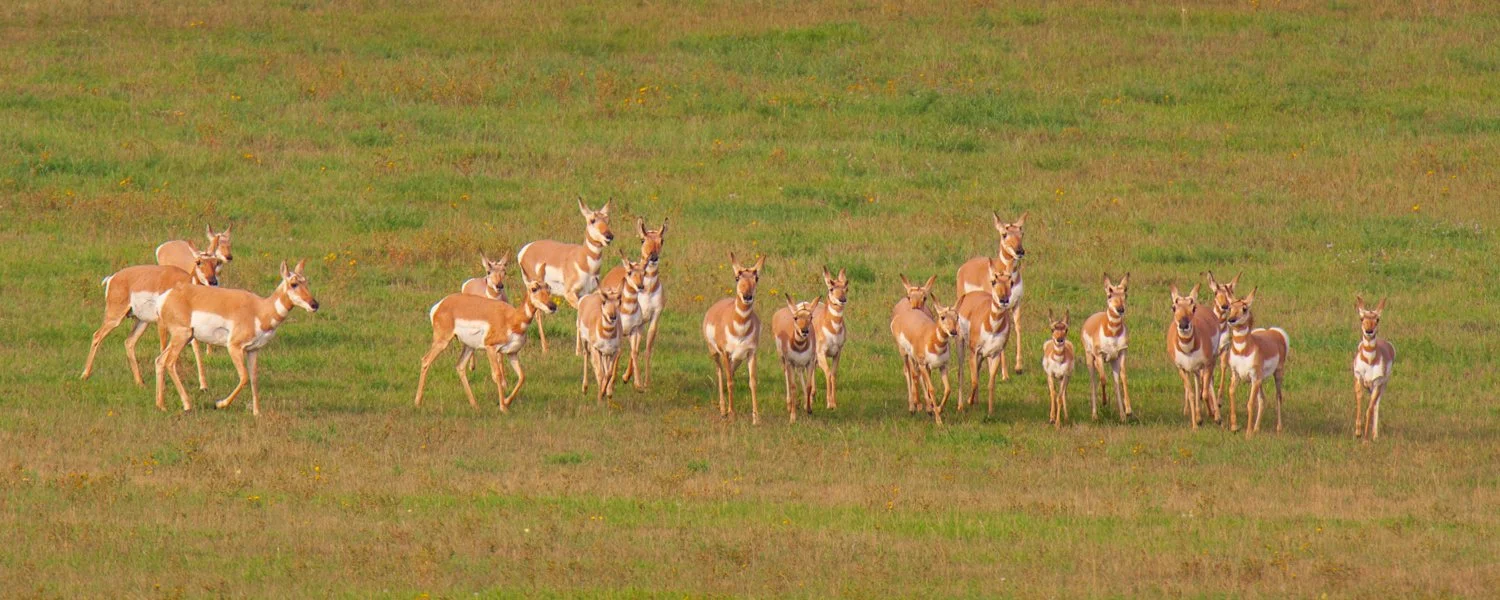
Pronghorn herd, North Dakota
At 16 he got a job photographing an oil rig and workers in Southwest Wyoming. In the morning he awoke to Pronghorn nearby:
“A herd of pronghorn antelope stood north of the rig. Fourteen animals. Their bodies were sleek. Color on their throats and breasts was a necklace work of tans, blacks, and whites. They were like gazelles, refined in muscular detail, with outlines striking against the horizon. They faced the same direction, as if the wind left hem here momentarily.”
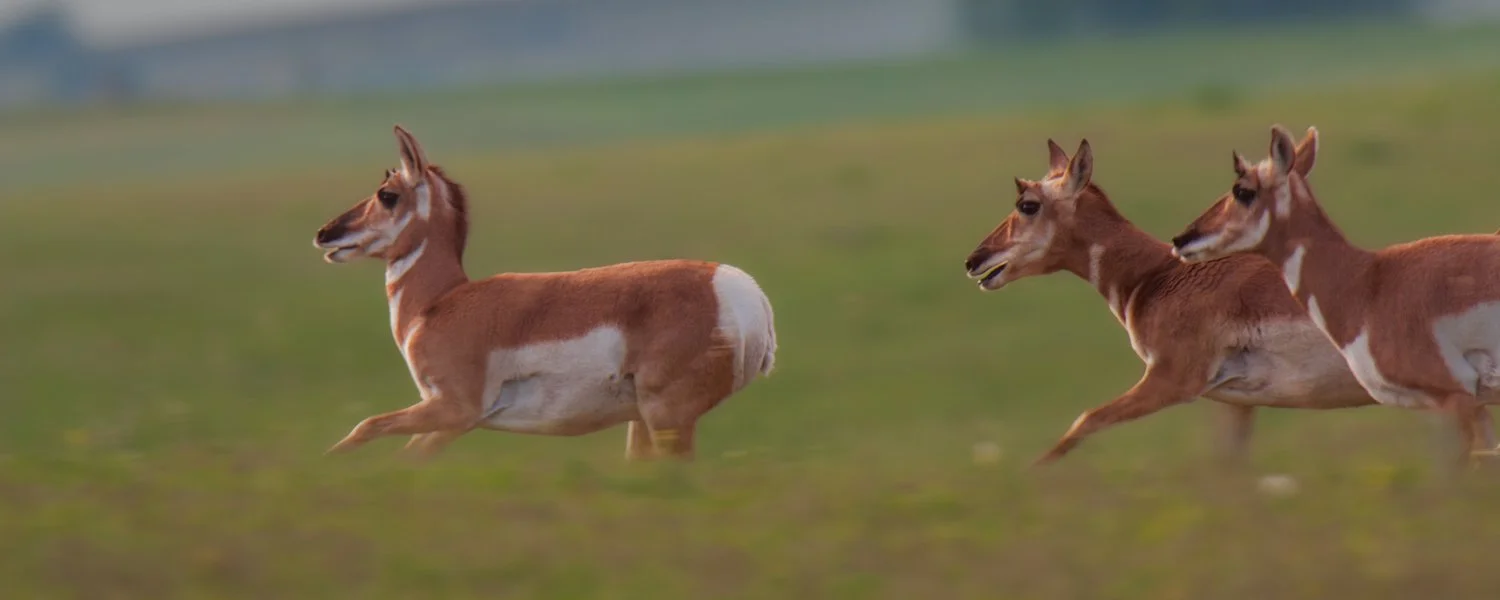
“Pronghorn eyes are seated farther to the outside of the skull than those of most prey animals, giving them wider vision in this open topography. The eyes are large enough to belong to a draft horse while the body is less than half the size of a small thoroughbred’s. They are meant solely for an animal who lives in the open, in places where you can see from one level horizon to the next.”
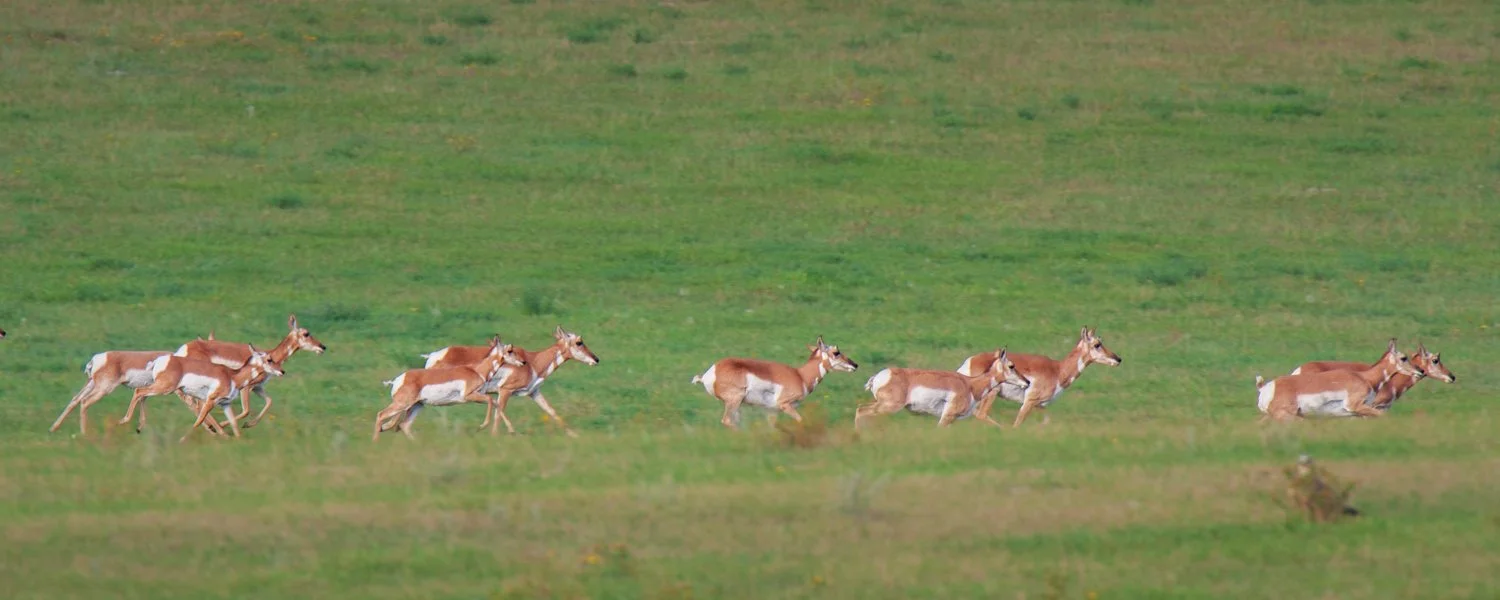
“They do not run like deer, who will gather speed with hesitation, glancing back, jumping and weaving between trees. Not like elk, the ones that crash and gallop, heavy and solid, moving toward a forest into which they can vanish. The pronghorn were gone with grace, sprinting into the open. The moved like birds, swerving together as they aimed for a single point. They are the fastest long-distance runners on the continent, some of the fastest land creatures in the world, clocked at nearly sixty miles per hour.”
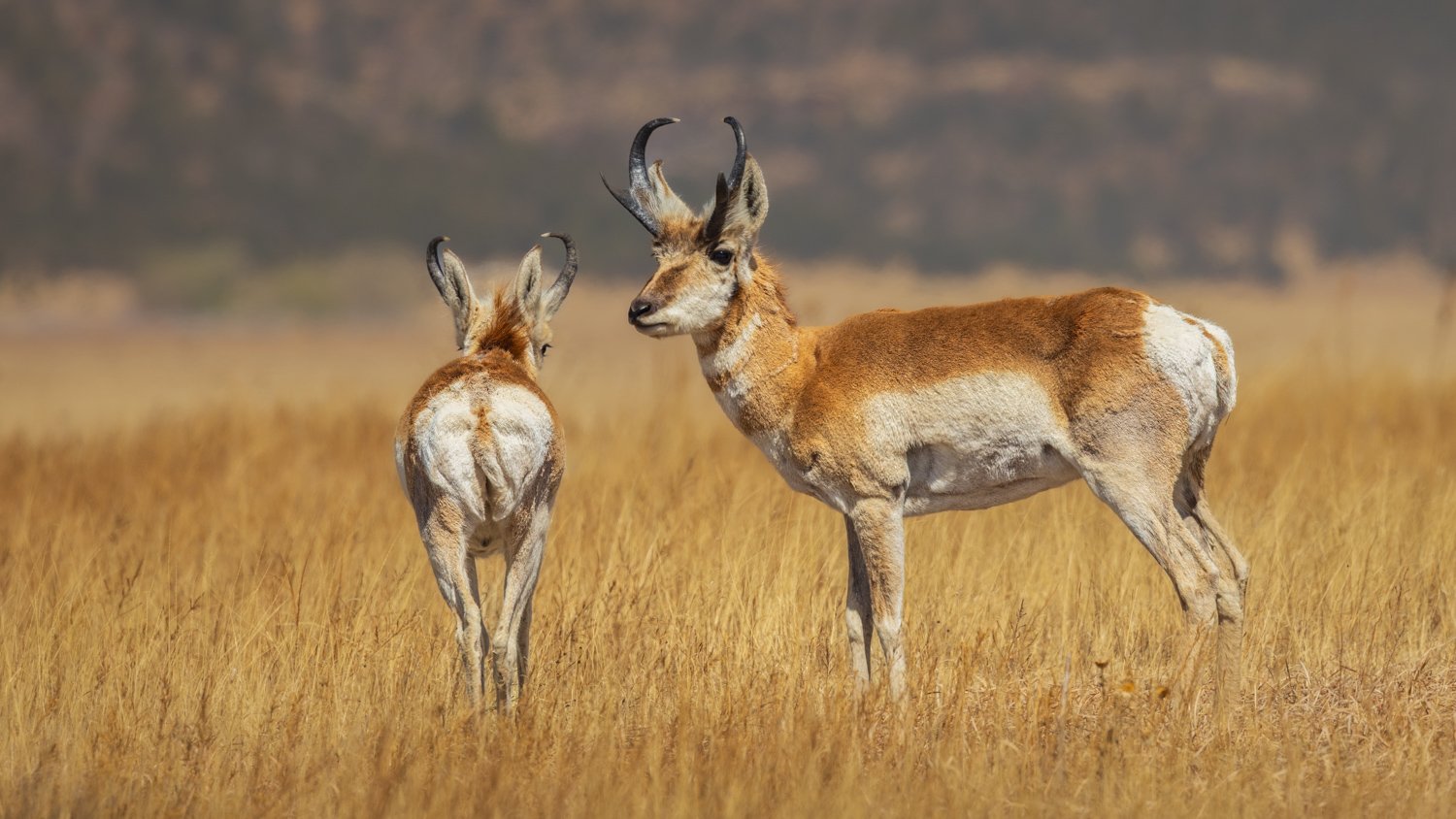
Pronghorn, Ft. Union National Monument, New Mexico
“On each, male and female, was a set of short black horns. Those on the males were more ornate. They were different shapes, hooking inward or to the sides or down toward the skull, rooted just above the eye sockets, in front of the ears, where a bone core was encased in smooth black keratin.”
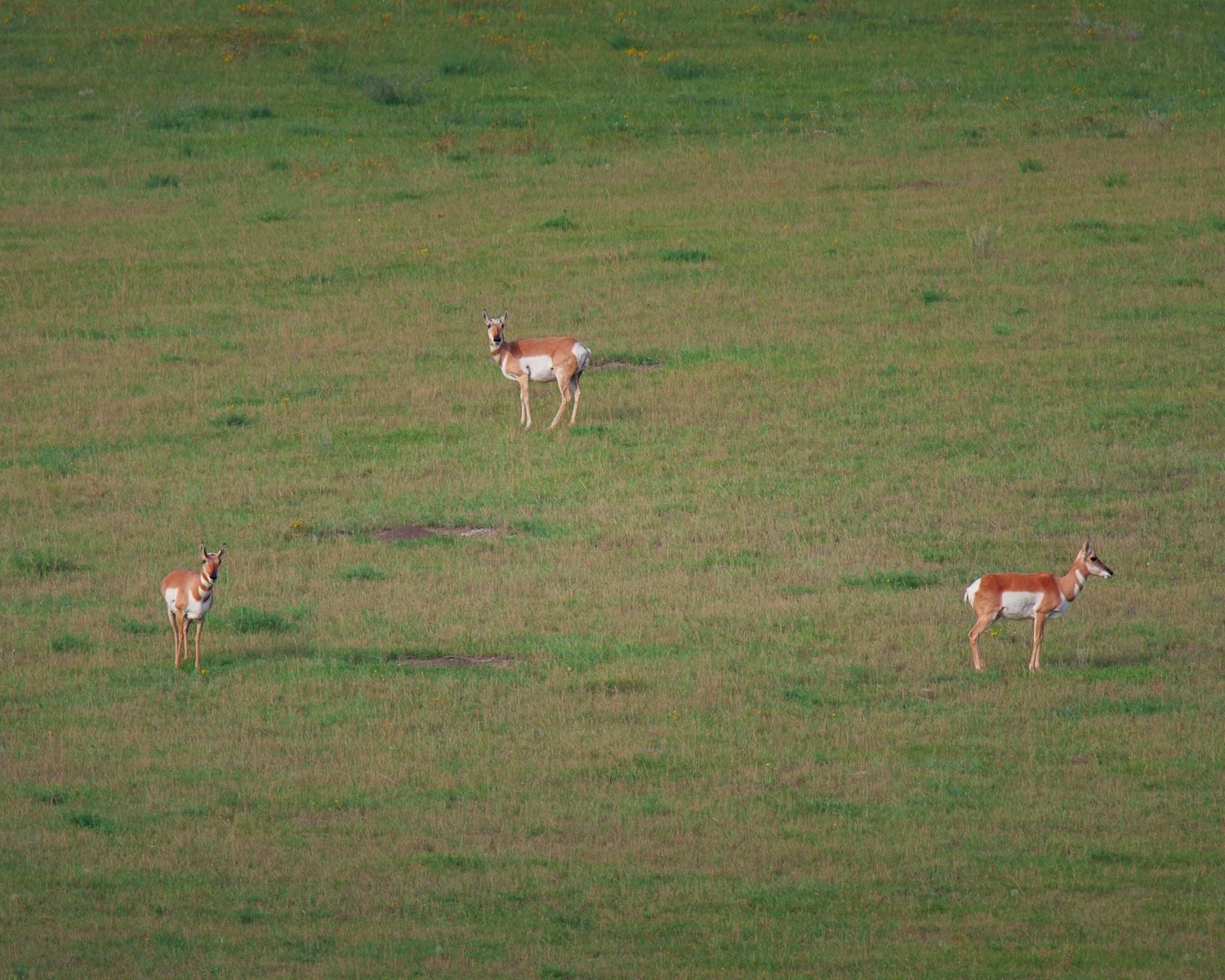
“The pronghorn’s speed is overkill, outpacing all predators so well that there is no sense in a chase. The pronghorn was once hunted across Wyoming by the North American cheetah, which explains why the pronghorn came to run more like a cheetah than a deer. The two species nearly match speeds. Twelve thousand years ago the cheetah vanished from this side of the planet and the pronghorn survived. Embedded in the pronghorn’s ability to run so outlandishly fast are the cheetahs in their memory.”
All quotes, The Animal Dialogues, Craig Childs copyright 1997, 2007